•  
Production of Christmas Glass Spheres - Mexico

Production of Christmas Glass Spheres - Mexico

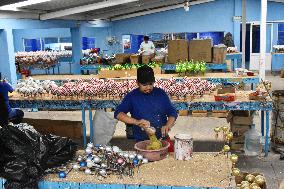
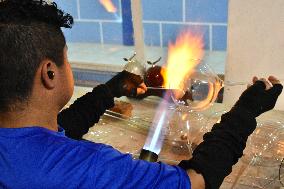
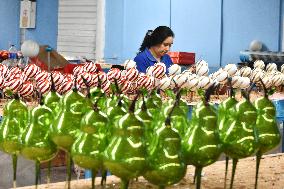
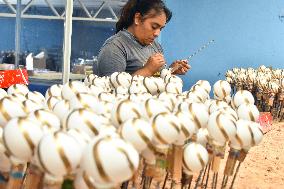
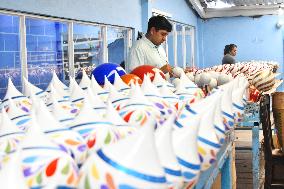
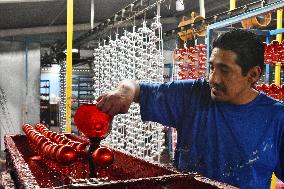
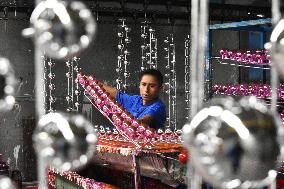
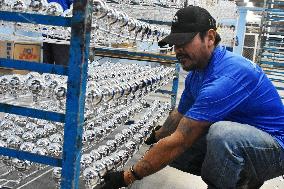
Workers at the Christmas ornament factory 'El Castillo de la Esfera' decorating glass bubbles as part of the manufacturing process for traditional christmas glass spheres to decorate Christmas trees. Francisco Tirado Saavedra and Lucila Lozada Hernandez founded the Christmas ornament factory 'El Castillo de la Esfera' more than 33 years ago; it is one of the largest factories in the country, producing 12,000 christmas spheres per day. on December 9, 2025 in Chignahuapan, Mexico. Photo by Carlos Tischler/ Eyepix Group/ABACAPRESS.COM

  •  
Production of Christmas Glass Spheres - Mexico

Production of Christmas Glass Spheres - Mexico

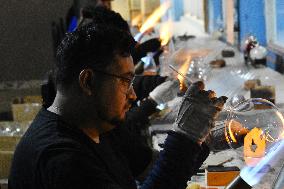
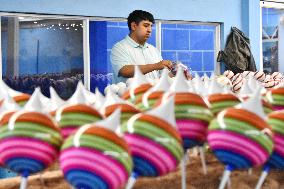
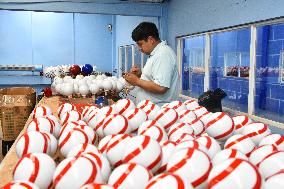
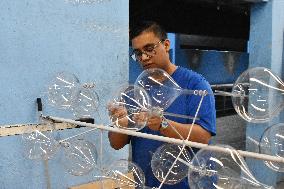
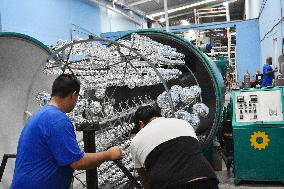
Workers at the Christmas ornament factory 'El Castillo de la Esfera' making blown glass spheres as part of the manufacturing process for traditional christmas glass spheres to decorate Christmas trees. Francisco Tirado Saavedra and Lucila Lozada Hernandez founded the Christmas ornament factory 'El Castillo de la Esfera' more than 33 years ago; it is one of the largest factories in the country, producing 12,000 christmas spheres per day. on December 9, 2025 in Chignahuapan, Mexico. Photo by Carlos Tischler/ Eyepix Group/ABACAPRESS.COM

  •  
Production of Christmas Glass Spheres - Mexico

Production of Christmas Glass Spheres - Mexico

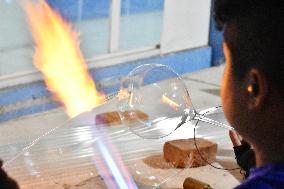
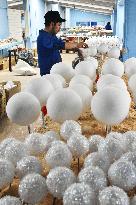
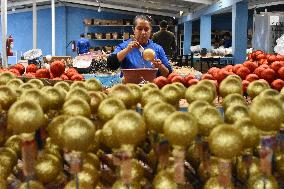
Workers at the Christmas ornament factory 'El Castillo de la Esfera' making blown glass spheres as part of the manufacturing process for traditional christmas glass spheres to decorate Christmas trees. Francisco Tirado Saavedra and Lucila Lozada Hernandez founded the Christmas ornament factory 'El Castillo de la Esfera' more than 33 years ago; it is one of the largest factories in the country, producing 12,000 christmas spheres per day. on December 9, 2025 in Chignahuapan, Mexico. Photo by Carlos Tischler/ Eyepix Group/ABACAPRESS.COM

  •  
Production of Christmas Glass Spheres - Mexico

Production of Christmas Glass Spheres - Mexico

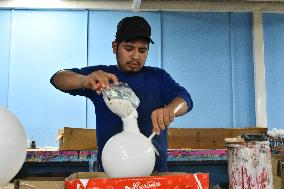
Workers at the Christmas ornament factory 'El Castillo de la Esfera' decorating glass bubbles as part of the manufacturing process for traditional christmas glass spheres to decorate Christmas trees. Francisco Tirado Saavedra and Lucila Lozada Hernandez founded the Christmas ornament factory 'El Castillo de la Esfera' more than 33 years ago; it is one of the largest factories in the country, producing 12,000 christmas spheres per day. on December 9, 2025 in Chignahuapan, Mexico. Photo by Carlos Tischler/ Eyepix Group/ABACAPRESS.COM

  •  
Production of Christmas Glass Spheres - Mexico

Production of Christmas Glass Spheres - Mexico

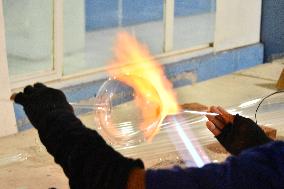
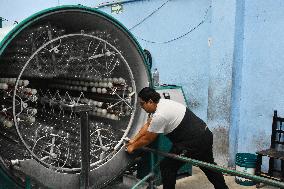
A worker at the Christmas ornament factory 'El Castillo de la Esfera' making blown glass spheres as part of the manufacturing process for traditional christmas glass spheres to decorate Christmas trees. Francisco Tirado Saavedra and Lucila Lozada Hernandez founded the Christmas ornament factory 'El Castillo de la Esfera' more than 33 years ago; it is one of the largest factories in the country, producing 12,000 christmas spheres per day. on December 9, 2025 in Chignahuapan, Mexico. Photo by Carlos Tischler/ Eyepix Group/ABACAPRESS.COM

  •  
Production of Christmas Glass Spheres - Mexico

Production of Christmas Glass Spheres - Mexico

A worker at the Christmas ornament factory 'El Castillo de la Esfera' making blown glass spheres as part of the manufacturing process for traditional christmas glass spheres to decorate Christmas trees. Francisco Tirado Saavedra and Lucila Lozada Hernandez founded the Christmas ornament factory 'El Castillo de la Esfera' more than 33 years ago; it is one of the largest factories in the country, producing 12,000 christmas spheres per day. on December 9, 2025 in Chignahuapan, Mexico. Photo by Carlos Tischler/ Eyepix Group/ABACAPRESS.COM

  •  
Production of Christmas Glass Spheres - Mexico

Production of Christmas Glass Spheres - Mexico

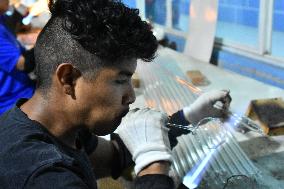
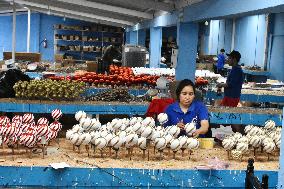
A worker at the Christmas ornament factory 'El Castillo de la Esfera' decorating glass bubbles as part of the manufacturing process for traditional christmas glass spheres to decorate Christmas trees. Francisco Tirado Saavedra and Lucila Lozada Hernandez founded the Christmas ornament factory 'El Castillo de la Esfera' more than 33 years ago; it is one of the largest factories in the country, producing 12,000 christmas spheres per day. on December 9, 2025 in Chignahuapan, Mexico. Photo by Carlos Tischler/ Eyepix Group/ABACAPRESS.COM

  •  
Production of Christmas Glass Spheres - Mexico

Production of Christmas Glass Spheres - Mexico

A worker at the Christmas ornament factory 'El Castillo de la Esfera' making blown glass spheres as part of the manufacturing process for traditional christmas glass spheres to decorate Christmas trees. Francisco Tirado Saavedra and Lucila Lozada Hernandez founded the Christmas ornament factory 'El Castillo de la Esfera' more than 33 years ago; it is one of the largest factories in the country, producing 12,000 christmas spheres per day. on December 9, 2025 in Chignahuapan, Mexico. Photo by Carlos Tischler/ Eyepix Group/ABACAPRESS.COM

  •  
Production of Christmas Glass Spheres - Mexico

Production of Christmas Glass Spheres - Mexico

A worker at the Christmas ornament factory 'El Castillo de la Esfera' making blown glass spheres as part of the manufacturing process for traditional christmas glass spheres to decorate Christmas trees. Francisco Tirado Saavedra and Lucila Lozada Hernandez founded the Christmas ornament factory 'El Castillo de la Esfera' more than 33 years ago; it is one of the largest factories in the country, producing 12,000 christmas spheres per day. on December 9, 2025 in Chignahuapan, Mexico. Photo by Carlos Tischler/ Eyepix Group/ABACAPRESS.COM

  •  
Production of Christmas Glass Spheres - Mexico

Production of Christmas Glass Spheres - Mexico

A worker at the Christmas ornament factory 'El Castillo de la Esfera' decorating glass bubbles as part of the manufacturing process for traditional christmas glass spheres to decorate Christmas trees. Francisco Tirado Saavedra and Lucila Lozada Hernandez founded the Christmas ornament factory 'El Castillo de la Esfera' more than 33 years ago; it is one of the largest factories in the country, producing 12,000 christmas spheres per day. on December 9, 2025 in Chignahuapan, Mexico. Photo by Carlos Tischler/ Eyepix Group/ABACAPRESS.COM

  •  
Production of Christmas Glass Spheres - Mexico

Production of Christmas Glass Spheres - Mexico

A worker at the Christmas ornament factory 'El Castillo de la Esfera' decorating glass bubbles as part of the manufacturing process for traditional christmas glass spheres to decorate Christmas trees. Francisco Tirado Saavedra and Lucila Lozada Hernandez founded the Christmas ornament factory 'El Castillo de la Esfera' more than 33 years ago; it is one of the largest factories in the country, producing 12,000 christmas spheres per day. on December 9, 2025 in Chignahuapan, Mexico. Photo by Carlos Tischler/ Eyepix Group/ABACAPRESS.COM

  •  
Production of Christmas Glass Spheres - Mexico

Production of Christmas Glass Spheres - Mexico

A worker at the Christmas ornament factory 'El Castillo de la Esfera' decorating glass bubbles as part of the manufacturing process for traditional christmas glass spheres to decorate Christmas trees. Francisco Tirado Saavedra and Lucila Lozada Hernandez founded the Christmas ornament factory 'El Castillo de la Esfera' more than 33 years ago; it is one of the largest factories in the country, producing 12,000 christmas spheres per day. on December 9, 2025 in Chignahuapan, Mexico. Photo by Carlos Tischler/ Eyepix Group/ABACAPRESS.COM

  •  
Production of Christmas Glass Spheres - Mexico

Production of Christmas Glass Spheres - Mexico

A worker at the Christmas ornament factory 'El Castillo de la Esfera' decorating glass bubbles as part of the manufacturing process for traditional christmas glass spheres to decorate Christmas trees. Francisco Tirado Saavedra and Lucila Lozada Hernandez founded the Christmas ornament factory 'El Castillo de la Esfera' more than 33 years ago; it is one of the largest factories in the country, producing 12,000 christmas spheres per day. on December 9, 2025 in Chignahuapan, Mexico. Photo by Carlos Tischler/ Eyepix Group/ABACAPRESS.COM

  •  
Production of Christmas Glass Spheres - Mexico

Production of Christmas Glass Spheres - Mexico

A worker at the Christmas ornament factory 'El Castillo de la Esfera' decorating glass bubbles as part of the manufacturing process for traditional christmas glass spheres to decorate Christmas trees. Francisco Tirado Saavedra and Lucila Lozada Hernandez founded the Christmas ornament factory 'El Castillo de la Esfera' more than 33 years ago; it is one of the largest factories in the country, producing 12,000 christmas spheres per day. on December 9, 2025 in Chignahuapan, Mexico. Photo by Carlos Tischler/ Eyepix Group/ABACAPRESS.COM

  •  
Production of Christmas Glass Spheres - Mexico

Production of Christmas Glass Spheres - Mexico

A worker at the Christmas ornament factory 'El Castillo de la Esfera' decorating glass bubbles as part of the manufacturing process for traditional christmas glass spheres to decorate Christmas trees. Francisco Tirado Saavedra and Lucila Lozada Hernandez founded the Christmas ornament factory 'El Castillo de la Esfera' more than 33 years ago; it is one of the largest factories in the country, producing 12,000 christmas spheres per day. on December 9, 2025 in Chignahuapan, Mexico. Photo by Carlos Tischler/ Eyepix Group/ABACAPRESS.COM

  •  
Production of Christmas Glass Spheres - Mexico

Production of Christmas Glass Spheres - Mexico

A worker at the Christmas ornament factory 'El Castillo de la Esfera' decorating glass bubbles as part of the manufacturing process for traditional christmas glass spheres to decorate Christmas trees. Francisco Tirado Saavedra and Lucila Lozada Hernandez founded the Christmas ornament factory 'El Castillo de la Esfera' more than 33 years ago; it is one of the largest factories in the country, producing 12,000 christmas spheres per day. on December 9, 2025 in Chignahuapan, Mexico. Photo by Carlos Tischler/ Eyepix Group/ABACAPRESS.COM

  •  
Production of Christmas Glass Spheres - Mexico

Production of Christmas Glass Spheres - Mexico

A worker at the Christmas ornament factory 'El Castillo de la Esfera' decorating glass bubbles as part of the manufacturing process for traditional christmas glass spheres to decorate Christmas trees. Francisco Tirado Saavedra and Lucila Lozada Hernandez founded the Christmas ornament factory 'El Castillo de la Esfera' more than 33 years ago; it is one of the largest factories in the country, producing 12,000 christmas spheres per day. on December 9, 2025 in Chignahuapan, Mexico. Photo by Carlos Tischler/ Eyepix Group/ABACAPRESS.COM

  •  
Production of Christmas Glass Spheres - Mexico

Production of Christmas Glass Spheres - Mexico

A worker at the Christmas ornament factory 'El Castillo de la Esfera' decorating glass bubbles as part of the manufacturing process for traditional christmas glass spheres to decorate Christmas trees. Francisco Tirado Saavedra and Lucila Lozada Hernandez founded the Christmas ornament factory 'El Castillo de la Esfera' more than 33 years ago; it is one of the largest factories in the country, producing 12,000 christmas spheres per day. on December 9, 2025 in Chignahuapan, Mexico. Photo by Carlos Tischler/ Eyepix Group/ABACAPRESS.COM

  •  
Production of Christmas Glass Spheres - Mexico

Production of Christmas Glass Spheres - Mexico

A worker at the Christmas ornament factory 'El Castillo de la Esfera' decorating glass bubbles as part of the manufacturing process for traditional christmas glass spheres to decorate Christmas trees. Francisco Tirado Saavedra and Lucila Lozada Hernandez founded the Christmas ornament factory 'El Castillo de la Esfera' more than 33 years ago; it is one of the largest factories in the country, producing 12,000 christmas spheres per day. on December 9, 2025 in Chignahuapan, Mexico. Photo by Carlos Tischler/ Eyepix Group/ABACAPRESS.COM

  •  
Production of Christmas Glass Spheres - Mexico

Production of Christmas Glass Spheres - Mexico

A worker at the Christmas ornament factory 'El Castillo de la Esfera' decorating glass bubbles as part of the manufacturing process for traditional christmas glass spheres to decorate Christmas trees. Francisco Tirado Saavedra and Lucila Lozada Hernandez founded the Christmas ornament factory 'El Castillo de la Esfera' more than 33 years ago; it is one of the largest factories in the country, producing 12,000 christmas spheres per day. on December 9, 2025 in Chignahuapan, Mexico. Photo by Carlos Tischler/ Eyepix Group/ABACAPRESS.COM

  •  
Production of Christmas Glass Spheres - Mexico

Production of Christmas Glass Spheres - Mexico

A worker at the Christmas ornament factory 'El Castillo de la Esfera' decorating glass bubbles as part of the manufacturing process for traditional christmas glass spheres to decorate Christmas trees. Francisco Tirado Saavedra and Lucila Lozada Hernandez founded the Christmas ornament factory 'El Castillo de la Esfera' more than 33 years ago; it is one of the largest factories in the country, producing 12,000 christmas spheres per day. on December 9, 2025 in Chignahuapan, Mexico. Photo by Carlos Tischler/ Eyepix Group/ABACAPRESS.COM

  •  
Production of Christmas Glass Spheres - Mexico

Production of Christmas Glass Spheres - Mexico

A worker at the Christmas ornament factory 'El Castillo de la Esfera' decorating glass bubbles as part of the manufacturing process for traditional christmas glass spheres to decorate Christmas trees. Francisco Tirado Saavedra and Lucila Lozada Hernandez founded the Christmas ornament factory 'El Castillo de la Esfera' more than 33 years ago; it is one of the largest factories in the country, producing 12,000 christmas spheres per day. on December 9, 2025 in Chignahuapan, Mexico. Photo by Carlos Tischler/ Eyepix Group/ABACAPRESS.COM

  •  
Production of Christmas Glass Spheres - Mexico

Production of Christmas Glass Spheres - Mexico

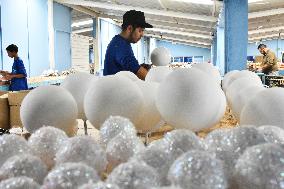
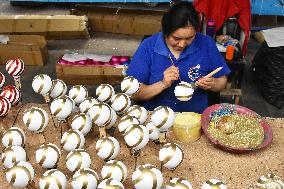
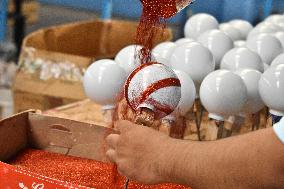
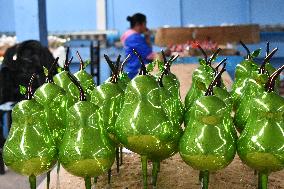
A worker at the Christmas ornament factory 'El Castillo de la Esfera' applies a base coat of paint to glass bubbles as part of the manufacturing process for traditional christmas glass spheres to decorate Christmas trees. Francisco Tirado Saavedra and Lucila Lozada Hernandez founded the Christmas ornament factory 'El Castillo de la Esfera' more than 33 years ago; it is one of the largest factories in the country, producing 12,000 christmas spheres per day. on December 9, 2025 in Chignahuapan, Mexico. Photo by Carlos Tischler/ Eyepix Group/ABACAPRESS.COM

  •  
Production of Christmas Glass Spheres - Mexico

Production of Christmas Glass Spheres - Mexico

A worker at the Christmas ornament factory 'El Castillo de la Esfera' applies a base coat of paint to glass bubbles as part of the manufacturing process for traditional christmas glass spheres to decorate Christmas trees. Francisco Tirado Saavedra and Lucila Lozada Hernandez founded the Christmas ornament factory 'El Castillo de la Esfera' more than 33 years ago; it is one of the largest factories in the country, producing 12,000 christmas spheres per day. on December 9, 2025 in Chignahuapan, Mexico. Photo by Carlos Tischler/ Eyepix Group/ABACAPRESS.COM

  •  
Production of Christmas Glass Spheres - Mexico

Production of Christmas Glass Spheres - Mexico

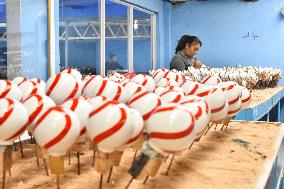
A worker at the Christmas ornament factory 'El Castillo de la Esfera' arranging glass bubbles as part of the manufacturing process for traditional christmas glass spheres to decorate Christmas trees. Francisco Tirado Saavedra and Lucila Lozada Hernandez founded the Christmas ornament factory 'El Castillo de la Esfera' more than 33 years ago; it is one of the largest factories in the country, producing 12,000 christmas spheres per day. on December 9, 2025 in Chignahuapan, Mexico. Photo by Carlos Tischler/ Eyepix Group/ABACAPRESS.COM

  •  
Production of Christmas Glass Spheres - Mexico

Production of Christmas Glass Spheres - Mexico

A worker at the Christmas ornament factory 'El Castillo de la Esfera' decorating glass bubbles as part of the manufacturing process for traditional christmas glass spheres to decorate Christmas trees. Francisco Tirado Saavedra and Lucila Lozada Hernandez founded the Christmas ornament factory 'El Castillo de la Esfera' more than 33 years ago; it is one of the largest factories in the country, producing 12,000 christmas spheres per day. on December 9, 2025 in Chignahuapan, Mexico. Photo by Carlos Tischler/ Eyepix Group/ABACAPRESS.COM

  •  
Production of Christmas Glass Spheres - Mexico

Production of Christmas Glass Spheres - Mexico

A worker at the Christmas ornament factory 'El Castillo de la Esfera' arranging glass bubbles as part of the manufacturing process for traditional christmas glass spheres to decorate Christmas trees. Francisco Tirado Saavedra and Lucila Lozada Hernandez founded the Christmas ornament factory 'El Castillo de la Esfera' more than 33 years ago; it is one of the largest factories in the country, producing 12,000 christmas spheres per day. on December 9, 2025 in Chignahuapan, Mexico. Photo by Carlos Tischler/ Eyepix Group/ABACAPRESS.COM

  •  
Production of Christmas Glass Spheres - Mexico

Production of Christmas Glass Spheres - Mexico

A worker at the Christmas ornament factory 'El Castillo de la Esfera' applies a base coat of paint to glass bubbles as part of the manufacturing process for traditional christmas glass spheres to decorate Christmas trees. Francisco Tirado Saavedra and Lucila Lozada Hernandez founded the Christmas ornament factory 'El Castillo de la Esfera' more than 33 years ago; it is one of the largest factories in the country, producing 12,000 christmas spheres per day. on December 9, 2025 in Chignahuapan, Mexico. Photo by Carlos Tischler/ Eyepix Group/ABACAPRESS.COM

  •  
Production of Christmas Glass Spheres - Mexico

Production of Christmas Glass Spheres - Mexico

A worker at the Christmas ornament factory 'El Castillo de la Esfera' applies a base coat of paint to glass bubbles as part of the manufacturing process for traditional christmas glass spheres to decorate Christmas trees. Francisco Tirado Saavedra and Lucila Lozada Hernandez founded the Christmas ornament factory 'El Castillo de la Esfera' more than 33 years ago; it is one of the largest factories in the country, producing 12,000 christmas spheres per day. on December 9, 2025 in Chignahuapan, Mexico. Photo by Carlos Tischler/ Eyepix Group/ABACAPRESS.COM

  •  
Tie-Dye Technique Of Bai Ethnic Group - Chin

Tie-Dye Technique Of Bai Ethnic Group - Chin

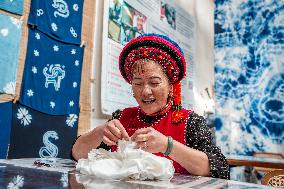
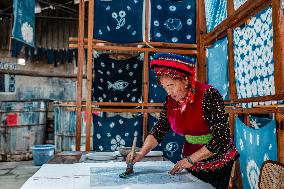
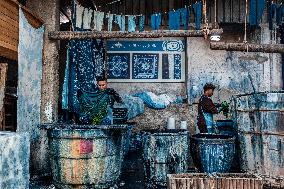
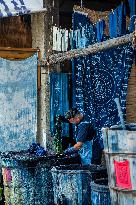
Duan Yuan, an inheritor of the tie-dye technique of Bai ethnic group, makes tie-dye designs in a dyehouse in Zhoucheng Village of Dali Bai Autonomous Prefecture, southwest China's Yunnan Province, November 21, 2025. Known as the hometown of the tie-dye technique of Bai ethnic group, Zhoucheng Village hosts over 200 households engaging in tie-dye businesses, with the number of employees exceeding 4,000. As a traditional folk technique of the Bai ethnic group, tie-dye boasts a history spanning over a thousand years and was included in the first batch of China's national intangible cultural heritage list in 2006. Tying and dyeing are the core steps in the process of making indigo tie-dye products. Artisans use needles and threads to create various patterns on the fabric, which are then dyed with plant-based dyes, resulting in blue backgrounds adorned with vivid white patterns. Photo by Hu Chao/Xinhua/ABACAPRESS.COM

  •  
Tie-Dye Technique Of Bai Ethnic Group - Chin

Tie-Dye Technique Of Bai Ethnic Group - Chin

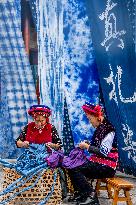
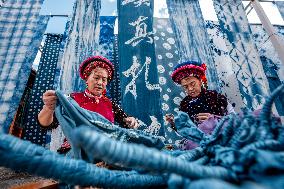
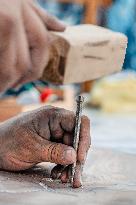
Duan Yinmei, an inheritor of the tie-dye technique of Bai ethnic group, creates knots on fabrics in a dyehouse in Zhoucheng Village of Dali Bai Autonomous Prefecture, southwest China's Yunnan Province, November 21, 2025. Known as the hometown of the tie-dye technique of Bai ethnic group, Zhoucheng Village hosts over 200 households engaging in tie-dye businesses, with the number of employees exceeding 4,000. As a traditional folk technique of the Bai ethnic group, tie-dye boasts a history spanning over a thousand years and was included in the first batch of China's national intangible cultural heritage list in 2006. Tying and dyeing are the core steps in the process of making indigo tie-dye products. Artisans use needles and threads to create various patterns on the fabric, which are then dyed with plant-based dyes, resulting in blue backgrounds adorned with vivid white patterns. Photo by Hu Chao/Xinhua/ABACAPRESS.COM

  •  
Tie-Dye Technique Of Bai Ethnic Group - Chin

Tie-Dye Technique Of Bai Ethnic Group - Chin

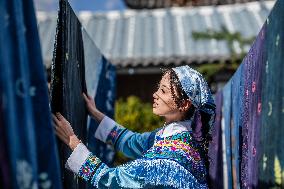
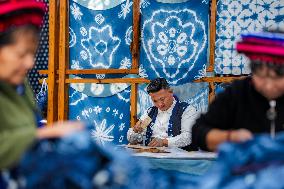
A woman experiences the tie-dye technique of Bai ethnic group in a dyehouse in Zhoucheng Village of Dali Bai Autonomous Prefecture, southwest China's Yunnan Province, November 21, 2025. Known as the hometown of the tie-dye technique of Bai ethnic group, Zhoucheng Village hosts over 200 households engaging in tie-dye businesses, with the number of employees exceeding 4,000. As a traditional folk technique of the Bai ethnic group, tie-dye boasts a history spanning over a thousand years and was included in the first batch of China's national intangible cultural heritage list in 2006. Tying and dyeing are the core steps in the process of making indigo tie-dye products. Artisans use needles and threads to create various patterns on the fabric, which are then dyed with plant-based dyes, resulting in blue backgrounds adorned with vivid white patterns. Photo by Hu Chao/Xinhua/ABACAPRESS.COM

  •  
Tie-Dye Technique Of Bai Ethnic Group - Chin

Tie-Dye Technique Of Bai Ethnic Group - Chin

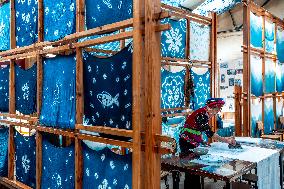
Duan Yinmei, an inheritor of the tie-dye technique of Bai ethnic group, dyes patterns on fabrics in a dyehouse in Zhoucheng Village of Dali Bai Autonomous Prefecture, southwest China's Yunnan Province, November 21, 2025. Known as the hometown of the tie-dye technique of Bai ethnic group, Zhoucheng Village hosts over 200 households engaging in tie-dye businesses, with the number of employees exceeding 4,000. As a traditional folk technique of the Bai ethnic group, tie-dye boasts a history spanning over a thousand years and was included in the first batch of China's national intangible cultural heritage list in 2006. Tying and dyeing are the core steps in the process of making indigo tie-dye products. Artisans use needles and threads to create various patterns on the fabric, which are then dyed with plant-based dyes, resulting in blue backgrounds adorned with vivid white patterns. Photo by Hu Chao/Xinhua/ABACAPRESS.COM

  •  
Tie-Dye Technique Of Bai Ethnic Group - Chin

Tie-Dye Technique Of Bai Ethnic Group - Chin

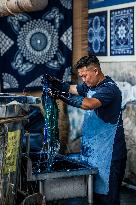
Duan Yuan, an inheritor of the tie-dye technique of Bai ethnic group, rinses dyed fabrics in a dyehouse in Zhoucheng Village of Dali Bai Autonomous Prefecture, southwest China's Yunnan Province, November 21, 2025. Known as the hometown of the tie-dye technique of Bai ethnic group, Zhoucheng Village hosts over 200 households engaging in tie-dye businesses, with the number of employees exceeding 4,000. As a traditional folk technique of the Bai ethnic group, tie-dye boasts a history spanning over a thousand years and was included in the first batch of China's national intangible cultural heritage list in 2006. Tying and dyeing are the core steps in the process of making indigo tie-dye products. Artisans use needles and threads to create various patterns on the fabric, which are then dyed with plant-based dyes, resulting in blue backgrounds adorned with vivid white patterns. Photo by Hu Chao/Xinhua/ABACAPRESS.COM

  •  
Tie-Dye Technique Of Bai Ethnic Group - Chin

Tie-Dye Technique Of Bai Ethnic Group - Chin

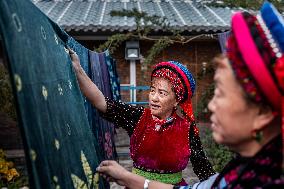
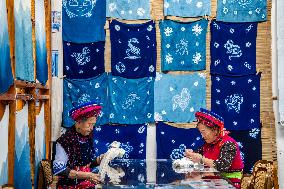
Duan Yinmei (L), an inheritor of the tie-dye technique of Bai ethnic group, and handicraftsman Duan Lilan dry tie-dye fabrics in a dyehouse in Zhoucheng Village of Dali Bai Autonomous Prefecture, southwest China's Yunnan Province, November 21, 2025. Known as the hometown of the tie-dye technique of Bai ethnic group, Zhoucheng Village hosts over 200 households engaging in tie-dye businesses, with the number of employees exceeding 4,000. As a traditional folk technique of the Bai ethnic group, tie-dye boasts a history spanning over a thousand years and was included in the first batch of China's national intangible cultural heritage list in 2006. Tying and dyeing are the core steps in the process of making indigo tie-dye products. Artisans use needles and threads to create various patterns on the fabric, which are then dyed with plant-based dyes, resulting in blue backgrounds adorned with vivid white patterns. Photo by Hu Chao/Xinhua/ABACAPRESS.COM

  •  
Tie-Dye Technique Of Bai Ethnic Group - Chin

Tie-Dye Technique Of Bai Ethnic Group - Chin

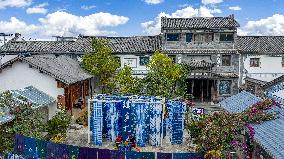
An aerial drone photo shows a scene at a dyehouse in Zhoucheng Village of Dali Bai Autonomous Prefecture, southwest China's Yunnan Province, November 21, 2025. Known as the hometown of the tie-dye technique of Bai ethnic group, Zhoucheng Village hosts over 200 households engaging in tie-dye businesses, with the number of employees exceeding 4,000. As a traditional folk technique of the Bai ethnic group, tie-dye boasts a history spanning over a thousand years and was included in the first batch of China's national intangible cultural heritage list in 2006. Tying and dyeing are the core steps in the process of making indigo tie-dye products. Artisans use needles and threads to create various patterns on the fabric, which are then dyed with plant-based dyes, resulting in blue backgrounds adorned with vivid white patterns. Photo by Hu Chao/Xinhua/ABACAPRESS.COM

  •  
Tie-Dye Technique Of Bai Ethnic Group - Chin

Tie-Dye Technique Of Bai Ethnic Group - Chin

Duan Yinmei (L), an inheritor of the tie-dye technique of Bai ethnic group, and handicraftsman Duan Lilan untie knots on fabrics in a dyehouse in Zhoucheng Village of Dali Bai Autonomous Prefecture, southwest China's Yunnan Province, November 21, 2025. Known as the hometown of the tie-dye technique of Bai ethnic group, Zhoucheng Village hosts over 200 households engaging in tie-dye businesses, with the number of employees exceeding 4,000. As a traditional folk technique of the Bai ethnic group, tie-dye boasts a history spanning over a thousand years and was included in the first batch of China's national intangible cultural heritage list in 2006. Tying and dyeing are the core steps in the process of making indigo tie-dye products. Artisans use needles and threads to create various patterns on the fabric, which are then dyed with plant-based dyes, resulting in blue backgrounds adorned with vivid white patterns. Photo by Hu Chao/Xinhua/ABACAPRESS.COM

  •  
Tie-Dye Technique Of Bai Ethnic Group - Chin

Tie-Dye Technique Of Bai Ethnic Group - Chin

Duan Yinmei (L), an inheritor of the tie-dye technique of Bai ethnic group, and handicraftsman Duan Lilan untie knots on fabrics in a dyehouse in Zhoucheng Village of Dali Bai Autonomous Prefecture, southwest China's Yunnan Province, November 21, 2025. Known as the hometown of the tie-dye technique of Bai ethnic group, Zhoucheng Village hosts over 200 households engaging in tie-dye businesses, with the number of employees exceeding 4,000. As a traditional folk technique of the Bai ethnic group, tie-dye boasts a history spanning over a thousand years and was included in the first batch of China's national intangible cultural heritage list in 2006. Tying and dyeing are the core steps in the process of making indigo tie-dye products. Artisans use needles and threads to create various patterns on the fabric, which are then dyed with plant-based dyes, resulting in blue backgrounds adorned with vivid white patterns. Photo by Hu Chao/Xinhua/ABACAPRESS.COM

  •  
Tie-Dye Technique Of Bai Ethnic Group - Chin

Tie-Dye Technique Of Bai Ethnic Group - Chin

Duan Yuan (L), an inheritor of the tie-dye technique of Bai ethnic group, dyes fabrics in a dyehouse in Zhoucheng Village of Dali Bai Autonomous Prefecture, southwest China's Yunnan Province, November 21, 2025. Known as the hometown of the tie-dye technique of Bai ethnic group, Zhoucheng Village hosts over 200 households engaging in tie-dye businesses, with the number of employees exceeding 4,000. As a traditional folk technique of the Bai ethnic group, tie-dye boasts a history spanning over a thousand years and was included in the first batch of China's national intangible cultural heritage list in 2006. Tying and dyeing are the core steps in the process of making indigo tie-dye products. Artisans use needles and threads to create various patterns on the fabric, which are then dyed with plant-based dyes, resulting in blue backgrounds adorned with vivid white patterns. Photo by Hu Chao/Xinhua/ABACAPRESS.COM

  •  
Tie-Dye Technique Of Bai Ethnic Group - Chin

Tie-Dye Technique Of Bai Ethnic Group - Chin

Duan Yuan, an inheritor of the tie-dye technique of Bai ethnic group, makes tie-dye designs in a dyehouse in Zhoucheng Village of Dali Bai Autonomous Prefecture, southwest China's Yunnan Province, November 21, 2025. Known as the hometown of the tie-dye technique of Bai ethnic group, Zhoucheng Village hosts over 200 households engaging in tie-dye businesses, with the number of employees exceeding 4,000. As a traditional folk technique of the Bai ethnic group, tie-dye boasts a history spanning over a thousand years and was included in the first batch of China's national intangible cultural heritage list in 2006. Tying and dyeing are the core steps in the process of making indigo tie-dye products. Artisans use needles and threads to create various patterns on the fabric, which are then dyed with plant-based dyes, resulting in blue backgrounds adorned with vivid white patterns. Photo by Hu Chao/Xinhua/ABACAPRESS.COM

  •  
Tie-Dye Technique Of Bai Ethnic Group - Chin

Tie-Dye Technique Of Bai Ethnic Group - Chin

Duan Yuan, an inheritor of the tie-dye technique of Bai ethnic group, dyes fabrics in a dyehouse in Zhoucheng Village of Dali Bai Autonomous Prefecture, southwest China's Yunnan Province, November 21, 2025. Known as the hometown of the tie-dye technique of Bai ethnic group, Zhoucheng Village hosts over 200 households engaging in tie-dye businesses, with the number of employees exceeding 4,000. As a traditional folk technique of the Bai ethnic group, tie-dye boasts a history spanning over a thousand years and was included in the first batch of China's national intangible cultural heritage list in 2006. Tying and dyeing are the core steps in the process of making indigo tie-dye products. Artisans use needles and threads to create various patterns on the fabric, which are then dyed with plant-based dyes, resulting in blue backgrounds adorned with vivid white patterns. Photo by Hu Chao/Xinhua/ABACAPRESS.COM

  •  
Tie-Dye Technique Of Bai Ethnic Group - Chin

Tie-Dye Technique Of Bai Ethnic Group - Chin

Duan Yuan, an inheritor of the tie-dye technique of Bai ethnic group, dyes fabrics in a dyehouse in Zhoucheng Village of Dali Bai Autonomous Prefecture, southwest China's Yunnan Province, November 21, 2025. Known as the hometown of the tie-dye technique of Bai ethnic group, Zhoucheng Village hosts over 200 households engaging in tie-dye businesses, with the number of employees exceeding 4,000. As a traditional folk technique of the Bai ethnic group, tie-dye boasts a history spanning over a thousand years and was included in the first batch of China's national intangible cultural heritage list in 2006. Tying and dyeing are the core steps in the process of making indigo tie-dye products. Artisans use needles and threads to create various patterns on the fabric, which are then dyed with plant-based dyes, resulting in blue backgrounds adorned with vivid white patterns. Photo by Hu Chao/Xinhua/ABACAPRESS.COM

  •  
Tie-Dye Technique Of Bai Ethnic Group - Chin

Tie-Dye Technique Of Bai Ethnic Group - Chin

Duan Yuan, an inheritor of the tie-dye technique of Bai ethnic group, makes tie-dye designs in a dyehouse in Zhoucheng Village of Dali Bai Autonomous Prefecture, southwest China's Yunnan Province, November 21, 2025. Known as the hometown of the tie-dye technique of Bai ethnic group, Zhoucheng Village hosts over 200 households engaging in tie-dye businesses, with the number of employees exceeding 4,000. As a traditional folk technique of the Bai ethnic group, tie-dye boasts a history spanning over a thousand years and was included in the first batch of China's national intangible cultural heritage list in 2006. Tying and dyeing are the core steps in the process of making indigo tie-dye products. Artisans use needles and threads to create various patterns on the fabric, which are then dyed with plant-based dyes, resulting in blue backgrounds adorned with vivid white patterns. Photo by Hu Chao/Xinhua/ABACAPRESS.COM

  •  
Tie-Dye Technique Of Bai Ethnic Group - Chin

Tie-Dye Technique Of Bai Ethnic Group - Chin

Duan Yinmei, an inheritor of the tie-dye technique of Bai ethnic group, unties knots on fabrics in a dyehouse in Zhoucheng Village of Dali Bai Autonomous Prefecture, southwest China's Yunnan Province, November 21, 2025. Known as the hometown of the tie-dye technique of Bai ethnic group, Zhoucheng Village hosts over 200 households engaging in tie-dye businesses, with the number of employees exceeding 4,000. As a traditional folk technique of the Bai ethnic group, tie-dye boasts a history spanning over a thousand years and was included in the first batch of China's national intangible cultural heritage list in 2006. Tying and dyeing are the core steps in the process of making indigo tie-dye products. Artisans use needles and threads to create various patterns on the fabric, which are then dyed with plant-based dyes, resulting in blue backgrounds adorned with vivid white patterns. Photo by Hu Chao/Xinhua/ABACAPRESS.COM

  •  
Tie-Dye Technique Of Bai Ethnic Group - Chin

Tie-Dye Technique Of Bai Ethnic Group - Chin

Duan Yinmei, an inheritor of the tie-dye technique of Bai ethnic group, dyes patterns on fabrics in a dyehouse in Zhoucheng Village of Dali Bai Autonomous Prefecture, southwest China's Yunnan Province, November 21, 2025. Known as the hometown of the tie-dye technique of Bai ethnic group, Zhoucheng Village hosts over 200 households engaging in tie-dye businesses, with the number of employees exceeding 4,000. As a traditional folk technique of the Bai ethnic group, tie-dye boasts a history spanning over a thousand years and was included in the first batch of China's national intangible cultural heritage list in 2006. Tying and dyeing are the core steps in the process of making indigo tie-dye products. Artisans use needles and threads to create various patterns on the fabric, which are then dyed with plant-based dyes, resulting in blue backgrounds adorned with vivid white patterns. Photo by Hu Chao/Xinhua/ABACAPRESS.COM

  •  
Tie-Dye Technique Of Bai Ethnic Group - Chin

Tie-Dye Technique Of Bai Ethnic Group - Chin

Duan Yinmei (R), an inheritor of the tie-dye technique of Bai ethnic group, and handicraftsman Duan Lilan create knots on fabrics in a dyehouse in Zhoucheng Village of Dali Bai Autonomous Prefecture, southwest China's Yunnan Province, November 21, 2025. Known as the hometown of the tie-dye technique of Bai ethnic group, Zhoucheng Village hosts over 200 households engaging in tie-dye businesses, with the number of employees exceeding 4,000. As a traditional folk technique of the Bai ethnic group, tie-dye boasts a history spanning over a thousand years and was included in the first batch of China's national intangible cultural heritage list in 2006. Tying and dyeing are the core steps in the process of making indigo tie-dye products. Artisans use needles and threads to create various patterns on the fabric, which are then dyed with plant-based dyes, resulting in blue backgrounds adorned with vivid white patterns. Photo by Hu Chao/Xinhua/ABACAPRESS.COM

  •  
Tuna Fishing in Barbate - Cadiz

Tuna Fishing in Barbate - Cadiz

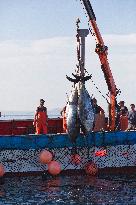
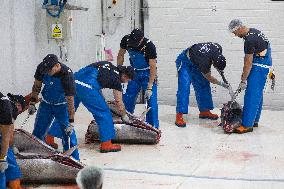
Several fishermen during the 'levantá' of tuna in the vicinity of Barbate, on May 27, 2025, in Barbate, Cadiz, Andalusia (Spain). The 'levantá' of Barbate is the culminating and most spectacular moment of traditional bluefin tuna fishing in the almadraba, an ancient art practiced every spring off the coast of Barbate (Cadiz). It consists of slowly raising the codend net, where the tuna have been trapped during their migration towards the Mediterranean, causing the large fish to emerge to the surface amidst flapping and foam, while the fishermen select and catch the largest specimens. Today, the technique has evolved: the divers sacrifice the tuna one by one with "luparas" (special poles), and the final lifting is done with cranes, although the ritual and collective nature of the process is preserved. Photo by Juanma Jiménez/Europa Press/ABACAPRESS.COM

  •  
Tuna Fishing in Barbate - Cadiz

Tuna Fishing in Barbate - Cadiz

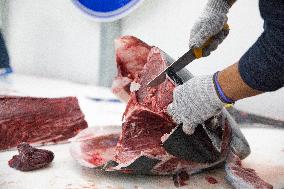
A man cuts up a tuna during the 'levantá' of tuna in the vicinity of Barbate, on May 27, 2025, in Barbate, Cadiz, Andalusia (Spain). The 'levantá' of Barbate is the culminating and most spectacular moment of the traditional fishing of bluefin tuna in the almadraba, an ancient art that is practiced every spring off the coast of Barbate (Cadiz). It consists of slowly raising the codend net, where the tuna have been trapped during their migration towards the Mediterranean, causing the large fish to emerge to the surface amidst flapping and foam, while the fishermen select and catch the largest specimens. Today, the technique has evolved: the divers sacrifice the tuna one by one with "luparas" (special poles), and the final lifting is done with cranes, although the ritual and collective nature of the process is preserved. Photo by Juanma Jiménez/Europa Press/ABACAPRESS.COM

  •  
Tuna Fishing in Barbate - Cadiz

Tuna Fishing in Barbate - Cadiz

Several fishermen during the 'levantá' of tuna in the vicinity of Barbate, on May 27, 2025, in Barbate, Cadiz, Andalusia (Spain). The 'levantá' of Barbate is the culminating and most spectacular moment of traditional bluefin tuna fishing in the almadraba, an ancient art practiced every spring off the coast of Barbate (Cadiz). It consists of slowly raising the codend net, where the tuna have been trapped during their migration towards the Mediterranean, causing the large fish to emerge to the surface amidst flapping and foam, while the fishermen select and catch the largest specimens. Today, the technique has evolved: the divers sacrifice the tuna one by one with "luparas" (special poles), and the final lifting is done with cranes, although the ritual and collective nature of the process is preserved. Photo by Juanma Jiménez/Europa Press/ABACAPRESS.COM

  •  
Tuna Fishing in Barbate - Cadiz

Tuna Fishing in Barbate - Cadiz

A man cuts up a tuna during the 'levantá' of tuna in the vicinity of Barbate, on May 27, 2025, in Barbate, Cadiz, Andalusia (Spain). The 'levantá' of Barbate is the culminating and most spectacular moment of the traditional fishing of bluefin tuna in the almadraba, an ancient art that is practiced every spring off the coast of Barbate (Cadiz). It consists of slowly raising the codend net, where the tuna have been trapped during their migration towards the Mediterranean, causing the large fish to emerge to the surface amidst flapping and foam, while the fishermen select and catch the largest specimens. Today, the technique has evolved: the divers sacrifice the tuna one by one with "luparas" (special poles), and the final lifting is done with cranes, although the ritual and collective nature of the process is preserved. Photo by Juanma Jiménez/Europa Press/ABACAPRESS.COM

  • Main
  • Top
  • Editorial
  • Creative
  • About Us
  • About ILG
  • Terms of use
  • Company
  • BEHIND
  • Price List
  • Single Plan
  • Monthly Plan
  • Services
  • Shooting
  • Rights Clearance
  • Support
  • FAQ
  • How To Buy
  • Contact Us
  • Become a Partner

© KYODO NEWS IMAGES INC

All Rights Reserved.

  • Editorial
  • Olympics
  • News
  • Sports
  • Japan
  • Tech
  • Royal
  • Disaster
  • NorthKorea
  • Old Japan
  • SNS
  • Creative
  • Food
  • Japan
  • Landscape
  • Animal
  • Popular
  • #Ukraine
  • #China
  • #coronavirus
  • #N. Korea
  • #Thailand
  • #Russia
  • #Ukraine
  • #China
  • #coronavirus
  • #N. Korea
  • #Thailand
  • #Russia
  • Food
  • Japan
  • Landscape
  • Animal
  • Olympics
  • News
  • Sports
  • Japan
  • Tech
  • Royal
  • Disaster
  • NorthKorea
  • Old Japan
  • SNS